Some places become landmarks because of their architecture. Others become memorable because of the experiences people associate with them. Kapali Theatre earned its place in Bengaluru’s history through cinema, technology and the generations of moviegoers who gathered there.
For nearly five decades, the theatre was one of the most recognisable entertainment destinations in Gandhi Nagar. Today, the same location has been transformed into Kapali Mall, bringing cinema back alongside shopping, food and indoor entertainment.
The building and visitor experience have changed, but the Kapali name continues to connect the location’s past with its present.
The Beginning of Kapali Theatre
Kapali Theatre opened on 16 February 1968 on Subedar Chatram Road, now commonly known as SC Road, in Gandhi Nagar. It was inaugurated by Morarji Desai, who was serving as the Union Finance Minister at the time.
The location was ideal for a major cinema. Gandhi Nagar was developing into Bengaluru’s film district, with theatres, film distributors, production offices, hotels and restaurants operating across the neighbourhood.
Kapali Theatre was also close to Majestic, Kempegowda Bus Station and the city railway station. This made it accessible to viewers travelling from different parts of Bengaluru as well as those arriving from nearby towns.
However, location alone was not responsible for Kapali’s popularity. Its enormous auditorium and distinctive projection system created a cinema experience unlike most other theatres in the city.
A Different Kind of Cinema Experience
Kapali Theatre was recognised as India’s first and only theatre built for the three projector Cinerama format. This technology used three synchronised projectors to display different portions of a film across a wide and deeply curved screen.
The format was designed to create a panoramic viewing experience. Rather than watching images on a conventional flat screen, audiences saw visuals extending across a much broader field of view.
Kapali reportedly began its cinema journey with This Is Cinerama, a production created to demonstrate the capabilities of the format.
The theatre originally had more than 1,400 seats, making it one of the largest single screen cinemas in the region. Major film releases could therefore attract an audience on a scale rarely seen in modern cinema auditoriums.
The size of the screen, the number of viewers and the excitement surrounding popular releases made every important screening feel like a public event.
Kapali Theatre and Kannada Cinema
Although the theatre was known for Cinerama technology, Kannada cinema became central to its identity.
Major releases drew large crowds to Gandhi Nagar. Fans gathered outside the theatre for opening shows, displayed large cutouts of actors and celebrated successful films. Releasing a movie at Kapali carried prestige because filling such a large auditorium was a significant achievement.
Dr Rajkumar’s Mannina Maga is remembered as the first Kannada film to complete a 100 day run at Kapali Theatre. Many other popular films were screened at the venue over the following decades.
For regular visitors, the experience extended beyond the movie. Travelling to Gandhi Nagar, buying tickets, meeting friends outside the theatre and discussing the film after the show all became part of the memory.
Kapali was not simply a place where films were shown. It was part of Bengaluru’s shared cinema culture.
Why Gandhi Nagar Was Important
During the height of the single screen era, Gandhi Nagar and Majestic contained several theatres within a relatively small area. Each venue developed its own identity, audience and connection with the local film industry.
Kapali stood out because of its size, curved screen and ability to attract large crowds. Its position near major transport connections also made it a familiar reference point for residents and visitors.
The neighbourhood around the theatre benefited from the steady movement of moviegoers. Restaurants, shops and other local businesses became part of a complete cinema outing.
The current shopping mall in Gandhi Nagar continues to serve people visiting this busy part of central Bengaluru for shopping, dining, work, travel and entertainment.
The Final Show at Kapali Theatre
Cinema habits began to change as multiplexes became more common. Audiences could choose from several films and showtimes in the same complex. Smaller auditoriums were also easier to operate than a theatre designed to seat more than a thousand people.
Television, home entertainment and streaming services introduced further changes to how audiences watched films. Maintaining large single screen properties in central urban areas became increasingly challenging.
Kapali Theatre screened its final film in October 2017. The building was later demolished as the site prepared for a new phase of development.
For many Bengaluru residents, the closure represented more than the loss of one cinema. It marked the end of an experience shaped by enormous screens, packed auditoriums and the collective excitement of watching a major release with a large audience.
Cinema, however, would eventually return to this historic address.
A Landmark Reimagined
The development of Kapali Mall reflects the way Bengaluru’s leisure habits have evolved. Visitors now often prefer places where several activities can be combined during one outing.
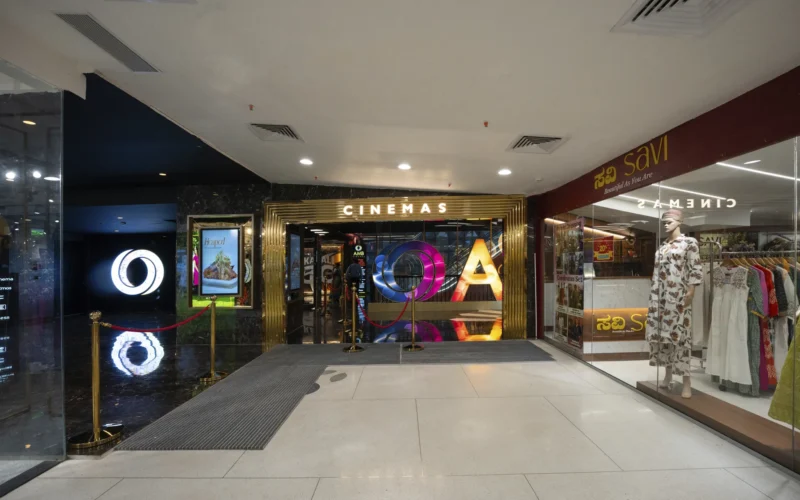
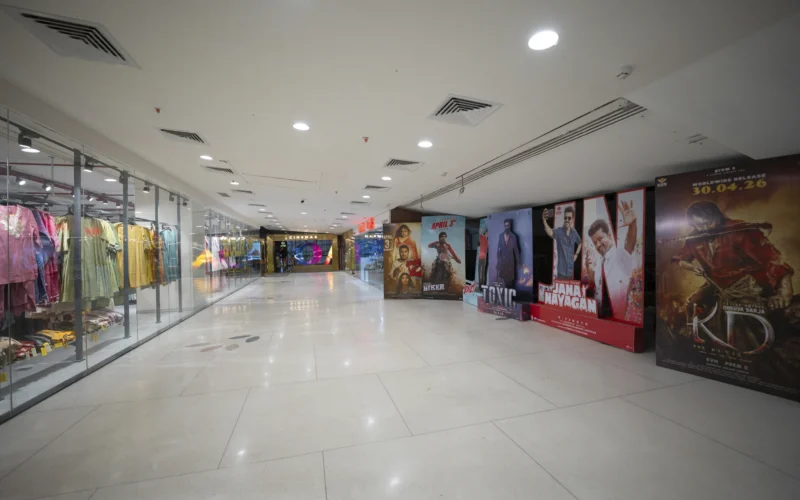
The mall brings fashion, dining, gaming and cinema together at the former theatre location. Families can shop and have a meal, friends can combine games with a movie, and travellers near Majestic can spend their available time in one convenient destination.
The purpose of the site has therefore expanded. Kapali is no longer only a cinema address, but entertainment remains an important part of its identity.
Cinema Returns Through AMB Cinemas
The strongest connection between the old and new Kapali is AMB Cinemas. Its nine screen multiplex brings moviegoing back to the location that housed Kapali Theatre for almost fifty years.
The multiplex also features South India’s first Dolby Cinema. This is a fitting development for a site historically known for distinctive cinema technology.
Kapali Theatre introduced audiences to the wide visual experience of Cinerama. The current multiplex continues that interest in premium cinema through modern picture and sound technology.
The format has changed from one enormous auditorium to multiple screens, giving audiences more choices in films and showtimes. Yet the location continues to be associated with the experience of watching movies on the big screen.
A Familiar Name for a New Generation
Retaining the Kapali name helps preserve the memory of the original theatre. Older residents may associate it with Kannada film releases, large crowds and the curved screen. Younger visitors will experience the location through stores, restaurants, gaming and contemporary cinema.
Visitors looking for entertainment close to the city’s transport district can also explore the mall near Majestic for a convenient shopping, dining or movie outing.
The transformation from Kapali Theatre to Kapali Mall reflects Bengaluru’s growth from the age of grand single screen cinemas to modern destinations offering several experiences under one roof.
Kapali Theatre completed its final screening in 2017, but the landmark’s story did not end. It continues through a new destination built around the same enduring ideas of cinema, community and shared experiences.